
Knowing When to Stop: What a Grade 2 Ankle Tear Cost Me
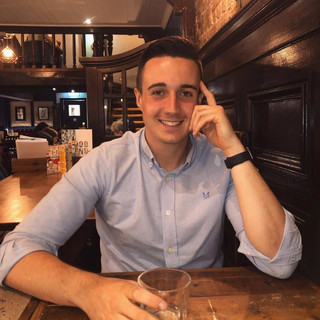
Bank Holiday weekend here in the UK was unseasonally sunny, and I was away with my family camping in the Peak District. As it was my 30th birthday weekend, I was free to exercise as I pleased, and I definitely took advantage of that!
On the Saturday, I took part in the Monsal Trail parkrun in Bakewell. This out and back route along the trail brought the challenge of narrow paths, slightly uneven, gravel terrain and a chance to test my lactate threshold after spending a lot of time building my aerobic endurance for the Manchester marathon and the triathlon season. I had a great time and came in at 12th with a time of 19:25. Not my fastest 5k, but for a tourist parkrun it was a great chance to run somewhere new.

Sunday I took to the trails once again, this time for a solo, circular 9km run from the campsite out across farmers’ fields, footpaths and country roads. It was a beautiful morning, the sun shining down and I was genuinely grateful for the ability to move my body this way, in an environment like this, at 30.

I had 200m left. That was it. The footpath back towards the campsite had hardened tyre tracks in it and my right ankle rolled in one of these grooves. I’ve rolled my ankle before a few times; the most recent in Autumn 2024 where I neglected to recover properly and ended up having to take an extra 6 weeks over winter off impact to give it time to heal properly. However, of the previous 2 or 3 times I’ve rolled that ankle, no time did it crunch like this. I heard and felt it, and I couldn’t weight bear on the foot at all in the moment. Some nearby walkers saw this ordeal and offered to help, but with my pride still just about intact I hobbled the 200m back to the campsite. When I got back to the tent and removed my shoe to see the bruising and swelling that had already engulfed my foot, the adrenaline started to wear off. I’m not even ashamed to admit I cried.
The following day I headed to the Urgent Treatment Centre back home where they x-rayed the foot and confirmed there were no breakages but advised me I’d torn the ligaments and to get booked in with a physio for rehab. Three days later I was in with a physio who had years of experience working in professional football, seeing his fair share of ankle injuries. The prognosis - a Grade 2 tear of the lateral ligaments of my ankle. 4-6 weeks off impact. Though in the short term, complete rest.
The Streak: 129 Weeks, Then Zero
129 weeks, without exception. That’s how long my activity streak was up until last week. It was the product of my focus on consistency; some weeks were low intensity due to injury or illness, others were more mobility post-event, and some were heavy in the peak of my training plan.

In my mid-20s I was refereeing once or twice weekly, so I was active, but I wasn’t healthy. My diet was sub-optimal, I was carrying extra weight and though I could move around a pitch and keep up with amateur footballers for 90 minutes, I wasn’t as healthy as I could be.
Over the next few years, I made fitness a key component of my life. After progressing into competing in triathlon last year, I had new goals and events to focus on. The big guiding ‘North star’ of these was to complete an iron distance triathlon in 2026 at the age of 30. A real test of endurance.
That goal gave me a focus, it gave me a reason to eat cleaner, to train more, and to be a more rounded athlete. Mobility work came into my training, I strength trained more than I ever have, and swimming started becoming a feature in my weekly training. I loved the variety and had my eyes set on 2026.
Those 129 weeks were a physical illustration of my lifestyle shift. Now that streak reads 0. The psychological impact of that streak ending was something I wasn’t expecting; initially I felt guilty for not exercising at all last week. And in all honesty, I didn’t even completely rest too well either. I was still mobile, I still went to work, I still cut the grass, and I still hobbled around after my 1-year-old son playing in the garden. Ice, compression and elevation helped manage the swelling, though my ankle was regularly sore, and that pain became more localised to the actual injured area as the week progressed.
The Calculations: Should You Race After an Injury?
The prognosis could have been so much worse - I know that. But to have this happen at the end of May has really thrown a spanner in the works of my season.
Fortunately, there’s been some front loading; I had the Lisbon half marathon and Manchester marathon in March/April, both of which I trained well for, and despite illness in the days before the first race, and a calf strain a fortnight from the second, I was able to come away with PBs. Then the multisport season started a few weeks back with Burghley Duathlon; my first duathlon and though not problem-free, I had a great time and was pleased with how the season has started and transitioned.

But now we’re here with a 4-6 week no impact recommendation in the highest demanding period of my season plan so far.
My first triathlon of the year, the Dambuster Standard distance on 21st June, has already gone. I made this call the same day I sprained my ankle; I knew this injury was worse than any previous ankle one I’ve had, and in 4 weeks I wouldn’t be ready to race a 10k off the back of a swim and bike. My first event withdrawal ever, but in some ways an easy decision to make. I knew that I’d be damaging my entire year by trying to push for that.
But that’s not the only decision I have to make.
The event was the Outlaw in Nottingham. Not an IRONMAN branded event, but half the cost, a lot flatter and only an hour from home. It made sense with a young family logistically and financially, and a flatter course for my first full distance triathlon felt like a ‘gentle’ introduction to the distance. For those not aware, it’s a 3.8km swim, into a 180km bike before running 42.2km. A marathon after around 7-9 hours of exercise already. It’s a massive test of endurance.
That’s on the 26th of July, 9 weeks after the ankle sprain. The physio said that I should be okay to compete in it, but as a coach as well as an athlete, I’ve had to really take a step back and look at this objectively with as little emotion as possible.
Week 1 from the injury was total recovery. Zero load. While this isn’t drastically impacting my cardiovascular fitness in such a short time frame, it does have a psychological impact on feeling ‘behind’ where I should be. Then 3-5 weeks of no impact, as I bring back in swimming first (with no kick) and light strength work to rehab my ankle, it’s another week or two before I start increasing intensity. Then I’m 6 weeks out from Outlaw.
At this point I could probably be comfortable, if I’ve focussed on my rehab, to start riding outside again where I risk some lateral load. I could also start bringing the kick back into my swimming, being even more cognisant of kicking from my hips not knees! So, then I’m trying to build from zero, to 180km bike endurance capability, in 6 weeks. It’s possible, but not necessarily in the time I have available each week to dedicate to training.
Then there’s the run. If I’m strict with recovery, I could be back to easy running in 4/5 weeks. So realistically this is running 30, maybe 40 minutes at a slow, steady pace, 4 weeks before Outlaw. While the cardiovascular fitness will probably still be there from Manchester, and I’m not building from zero, that’s not long. That’s also 4 weeks including a taper, so realistically 2 weeks, 3 at a push.
So, while Outlaw is possible, objectively it’s not right. My one primary driving goal the past 3 years, gone. Did Not Start. The decision making behind this was hard, but I know it’ll give me the time to recover properly and come back stronger. By deferring Outlaw to 2027, I can give it my all, train properly, and build into it so I give myself the best chance of not only completion, but success.
The Psychological Battle: The Hidden Cost of Injury
Last week was hard. I’ve got into such a routine of training, and those hits of dopamine I get from seeing my ‘fitness’ numbers going up, training load on Garmin being productive and my speeds and distances increasing. It helps with the motivation, when my goal race is far away, and the process is the real goal. But this week I lost that.
There were quite a few emotions throughout the week; it all started with disappointment. Disappointment that I have to spend time away from doing what I love that I won’t be able to compete in the events I’d been planning (and paid) for and that my long-term goal of the ultra-endurance challenge at age 30 was deferred.
Then as the week progressed and I came to terms with my ‘loss’ there were feelings of guilt. I didn’t owe the events to anyone; sure, I was representing RAF Triathlon at them both, but that isn’t everything. I felt guilty, to myself, that I was breaking the streak and losing consistency. And guilty to my family; that I was only able to hobble around after my son, and my wife was having to pick up the slack around the house and driving to/from nursery, as well as working a full-time job.
These are some of the hidden psychological impacts of an injury like this, at this stage of the season.
The Science Underneath the Feeling: How Long Does It Take to Lose Fitness?
A Grade 2 lateral ligament tear means real structural damage; collagen fibres partially ruptured, the joint capsule stressed, surrounding tissue inflamed. That inflammation isn't a problem to manage away. It's the body beginning the repair process and disrupting it in the acute phase by loading too soon doesn't just slow healing. It actively interferes with how the tissue rebuilds.
The fitness anxiety is understandable, but it's also mostly irrational. Meaningful aerobic deconditioning doesn't begin until around three to four weeks of complete inactivity. One week of protected rest costs almost nothing physiologically. What it protects is the structural foundation that every subsequent week of rehab and training builds on. Rush that phase and you extend the entire timeline. Not by days, but by weeks.
The hardest thing to accept is that rest at this stage is a training decision, not an absence of one. The discipline to do nothing is exactly as deliberate as the discipline to train. Sometimes the highest-performance choice looks, from the outside, like giving up.
How long does a Grade 2 ankle ligament tear take to heal?
A Grade 2 lateral ligament tear typically means four to six weeks off impact, though full return to sport usually takes longer. In my case the physio's guidance was four to six weeks with complete rest in the first week, then a graded return: swimming without kick first, light strength work for rehab, then progressive loading. Nine weeks after the injury I was cleared to race, and chose not to. Those are different things.
What Comes Next?
Now it’s time for a proper recovery block in my training plan. I’ve had my rest week, back to week 0. But I’m not. I’ve learnt a lot about training, performance, recovery, what works for me and what doesn’t. Those 129 weeks have shaped me as an athlete and a coach, and while it’s hard to break that streak and make a season-defining decision like deferring my A-race, I’m not starting from where I was two and a half years ago.

I’ll look towards Autumn and look to schedule perhaps a sprint or standard distance triathlon, to give me something to look forward to and finish the year on a high. I won’t be overloading my calendar; one event, one focus, one way to wrap up the year.
Getting an injury is hard. Stopping is hard. But it’s not the end, and you can learn something from the setback. If I couldn’t clear my ears, and was due to fly tomorrow, I’d be declaring myself as unfit to fly. I’m doing the same here, just unfit to race. I know this is right. I don’t feel good about it yet. Both are true.
Update, August 2026
The rehab is done. The ankle is fully recovered, which it would not have been if I'd forced Outlaw.
The plan that came out of this is better than the one it replaced. Rather than a single iron-distance attempt squeezed into a compromised year, 2027 has two peaks: Edinburgh Marathon in May, and Ironman Wales in Tenby in September, with Outlaw Half as the rehearsal in between. That's a proper build, not a rescue job.
I still don't enjoy having made the call. I'm still confident it was the right one.
Facing the same decision?
Working out whether to push on or pull out is one of the hardest calls in endurance sport, and it's much easier with someone who isn't emotionally invested in your race entry. The free 15-minute consultation is a good place to talk it through.


Comments