
The Coaching Philosophy I Learned in a Cockpit, Not on a Start Line
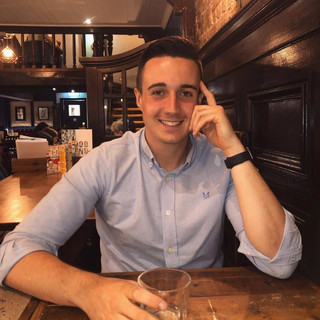

I've spent a large part of my working life watching people perform under pressure. Not in a gym, and not at a finish line - in aviation, where the quality of someone's thinking under load isn't measured in seconds off a PB. The stakes are rather higher than that.
That's where my coaching philosophy comes from. Not from a textbook on periodisation, and not from my own race results. From human factors; the discipline that studies how capable people make poor decisions when they're tired, stressed, saturated, or simply not paying attention to the right thing at the right time.
Because here's what twenty years around high-performance environments taught me: the plan is rarely the problem. The execution of the plan, by a human being having a real day, almost always is.
The plan is the easy part
Anyone can write you a training plan. There are free ones a search away, and most of them are perfectly good. If a plan on its own made you fast, we'd all have our PBs by now.
A plan is a model of an ideal athlete living an ideal life. You are not that. You have a job that ran hot last week, a child who didn't sleep, a niggle you're choosing to ignore, and a head full of everything else. The plan doesn't know any of that. Coaching is what happens in the gap between the plan and the life you're actually living.
So I don't start with the schedule. I start with the athlete in front of me.
Awareness before effort
In aviation we talk about situational awareness, knowing what's happening, understanding what it means, and being able to project what comes next. Lose it, and you can be working flat out while flying calmly into the ground.

Endurance athletes lose situational awareness constantly. They feel good early and bank time they'll pay back with interest. They feel flat and assume they're unfit, when they're actually under-fuelled or under-recovered. They train through a signal that was asking them to stop.
The single most valuable thing I can build in an athlete isn't a bigger engine. It's a better read on their own state - what I think of as their awareness window. The athlete who can accurately answer "what's actually going on with me right now, and what does it mean for the next hour?" will out-perform a fitter athlete who can't, almost every time.
Manage the margins, not just the peaks
Most amateur athletes train to raise their ceiling. Fair enough, fitness matters. But races are rarely won by the biggest ceiling. They're lost in the margins: the fuelling error at 30k, the pacing decision in the first mile, the kit choice that seemed trivial at 6am.
Aviation has a name for the discipline of spotting those margins before they bite, threat and error management. You don't pretend errors won't happen. You assume they will, you identify where they're most likely, and you build in the buffer to absorb them. I coach the same way. We don't chase a perfect race. We build an athlete who can have an imperfect day and still execute.
Fatigue is information, not just a cost
Fatigue is treated as the enemy, the thing to push through, the badge of a hard session. In a fatigue-risk world, we treat it differently: as data. Your body doesn't file "hard interval session" separately from "difficult week at work" or "three nights of broken sleep." It experiences total load, and it gives you readouts on that load all the time.
Learning to read those readouts, and to act on them rather than override them, isn't soft. It's the difference between an athlete who adapts and an athlete who breaks down in week nine of a twelve-week block.
The goal is an athlete who doesn't need me
This is the one that matters most, and it's the least fashionable. The point of coaching isn't dependency. It's transfer of ownership.
I want every athlete I work with to leave with a repeatable way of managing themselves - of assessing, deciding, and adjusting on their own, in the moment, when I'm nowhere near them. Race day is the one day I can't intervene. So everything before it is really about handing over the controls.
The best outcome isn't an athlete who hits the splits I gave them. It's an athlete who reads a day going sideways, makes a calm, deliberate decision, and salvages a result I couldn't have written into any plan.
Why this, and why me
Aviation taught me something that took years to fully land: competence isn't the absence of error. It's the management of it. The best operators aren't the ones who never face the unexpected, they're the ones who stay aware, stay deliberate, and make good decisions when the day stops cooperating.
That's what I coach. Not just the training, but the thinking that wraps around it. The plan is necessary. It has never once been sufficient.
If that's the kind of athlete you want to become; aware, adaptable, and in control of your own performance, that's the work I do.


Comments